

Hardware News Tech News Explainers
RAM Prices in 2026: Why Memory Costs So Much Right Now
Why RAM prices and SSD prices are still climbing in late 2026, what AI and HBM have to do with it, how long the shortage may last, and whether to buy now.
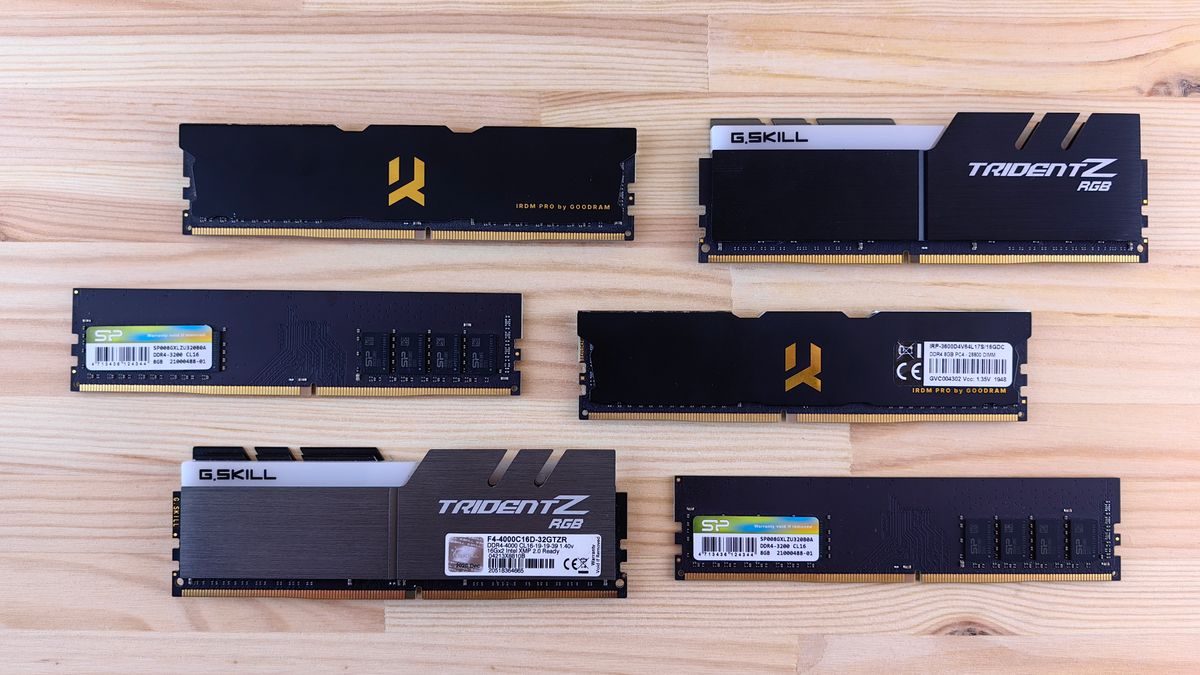
If you've shopped for a PC upgrade this Black Friday, you already know the punchline: RAM prices are still brutal. As of November 25, 2026, the cheapest 32GB DDR5-6000 kit Tom's Hardware could find in the US was $439. A year earlier, the same kind of kit sold for roughly $100 to $200. SSDs, graphics cards, laptops and even flagship phones have gotten pricier for the same reason.
The short version: AI data centers are buying memory faster than Samsung, SK hynix and Micron can make it, and the factories that would fix the problem won't be ready for a while. Memory makers are telling investors the squeeze gets tighter in 2027, not looser. So if you need RAM or an SSD for a real project, waiting for a crash probably isn't a winning bet. Below, we break down what happened, where prices sit now, how the shortage hits different devices, and what we'd actually do with our money.
Key takeaways
- A 32GB DDR5-6000 kit now starts around $430 to $440 in the US, roughly three to four times its October 2025 price.
- TrendForce expects DRAM contract prices to rise another 10% to 15% and NAND flash 15% to 20% in Q4 2026.
- Micron says supply will be tighter in 2027 and 2028 than in 2026, and IDC sees no relief before the end of 2027.
- PCs, laptops, phones and GPUs are all affected: IDC expects average PC prices to rise 17% in 2026.
- If you need memory or storage now, buy what you need at a fair price instead of waiting for a drop that may not come until 2028.
RAM prices in late 2026 by the numbers
What happened: how AI and HBM ate your RAM
Every stick of DDR5 in your desktop, every LPDDR chip in your phone and every flash chip in your SSD comes from a small number of fabs run by a handful of companies. Those same companies also make high-bandwidth memory (HBM), the stacked DRAM that sits next to AI accelerators from Nvidia and AMD. HBM sells for far more per bit than ordinary PC memory, and it eats more wafer capacity and advanced packaging time to produce. When hyperscalers started ordering AI servers by the hundreds of thousands, memory makers did the rational thing and steered capacity toward HBM and server DRAM.
That left less for everyone else. Tom's Hardware summed it up in December 2025: PC builders, laptop makers and phone makers ended up "fighting over the scraps of a shrinking pool of commodity DRAM." The nickname "RAMageddon" stuck because it happened so fast. A Corsair Vengeance DDR5-6000 32GB kit that cost $134.99 in September 2025 was selling for more than $420 by early December of that year.
The problem didn't stay in DRAM. AI servers also need huge amounts of fast enterprise SSD storage, so NAND flash got pulled in the same direction. In a May 2026 interview covered by PC Gamer, Team Group CEO Gerry Chen said AI-related demand already accounted for 40% to 50% of total memory supply, and that most memory produced in 2026 and 2027 already had buyers lined up.
Memory is no longer a commodity you can wait out. For now, it's an AI input that consumers happen to share.
Why the shortage hasn't fixed itself yet
In a normal memory cycle, high prices encourage new production, supply catches up, and prices fall. That still should happen eventually, but new fabs take years to build and equip. Memory makers also don't want to repeat the painful oversupply of past downturns, so they're expanding carefully. Meanwhile, they're earning record money: Micron's September 2026 results came with a record gross margin above 86%, according to Tom's Hardware. There's little pressure on suppliers to rush.
Current RAM and SSD prices in the US
Here's where street prices stand for common kits, based on Tom's Hardware's US price index updated November 25, 2026. "Lowest ever" is the cheapest price the site has tracked for that configuration.
| Memory kit | Best US price (Nov 2026) | Lowest ever tracked |
|---|---|---|
| DDR5-6000 16GB | $239 | $197 |
| DDR5-6000 32GB (2x16GB) | $439 | $72 |
| DDR5-5600 32GB | $439 | $72 |
| DDR5-6000 64GB | $947 | $159 |
| DDR5-6000 96GB | $2,049 | $189 |
| DDR4-3200 32GB | $196 | $193 |
DDR4 isn't a hiding place either. Tom's Hardware notes that 32GB DDR4 kits sold for $60 to $90 in October 2025 and now sit near $200.
SSD prices
Storage is following the same path, with a lag. Notebookcheck reported in late October 2026 that the contract price of a 256GB TLC SSD reached about $134 in Q3 2026, up from about $33 a year earlier. That's a wholesale figure, not what you pay at Best Buy, but retail has moved too: a 1TB PCIe 4.0 NVMe drive averaged about $144 in mid-October, and Samsung's 990 Evo Plus 1TB was listed at $237 after once selling for around $59. TrendForce expects NAND contract prices to rise another 15% to 20% this quarter, with enterprise SSDs climbing even faster.
How the memory shortage hits PCs, laptops, phones and GPUs
Desktops and laptops
Memory now makes up a much bigger slice of a PC's bill of materials, and PC makers have passed that on. Dell raised prices by 15% to 20% starting in mid-December 2025, according to TrendForce, and Lenovo and others followed in early 2026. IDC's June 2026 update forecasts global PC shipments falling 11.3% this year while average selling prices rise 17%, with Q4 2026 shipments expected to drop about 20% year over year. TrendForce also warns that PC DRAM supply could actually shrink in 2027 as more capacity shifts to servers.
In practice, you'll see this as higher sticker prices, fewer big discounts, and quieter changes like budget laptops shipping with 8GB instead of 16GB, or 256GB instead of 512GB of storage. Check the spec sheet carefully before you buy.
Smartphones
Phones use LPDDR memory and UFS flash, and both are squeezed. On October 1, 2026, Samsung raised US prices on the Galaxy S26 line by $100 (the S26 now starts at $1,000, the S26 Ultra at $1,400) and the 1TB Ultra by $200, citing memory costs. IDC expects global smartphone shipments to fall 12.9% in 2026 and warns that phones under $50 may disappear entirely, while others ship with less RAM and storage at the same price.
Graphics cards
GPUs are hit twice: they need GDDR6 or GDDR7 memory, and Nvidia and AMD would rather spend scarce resources on data center chips. The result is ugly. Tom's Hardware's GPU index lists the RTX 5070 at $899 (launch price $549), the RTX 5070 Ti at $1,400 ($749) and the Radeon RX 9070 XT at $999 ($599). Nvidia's long-rumored RTX 50 Super refresh, which was supposed to add more VRAM using 3GB GDDR7 chips, has reportedly been finished but held back because those memory chips cost too much. Nvidia hasn't announced the cards at all.
RAM price forecast for 2027 and 2028
Nobody serious is forecasting a quick drop. Here's what the people closest to the supply chain are saying:
- TrendForce (September 30, 2026): Q4 2026 DRAM contract prices up 10% to 15%, NAND up 15% to 20%, and PC makers expect DRAM supply to stay tight through 2027.
- Micron (September 30, 2026): CEO Sanjay Mehrotra said demand will exceed supply in 2027 and 2028 and that conditions should be tighter than in 2026, as reported by Computerworld.
- Team Group (November 2026): CEO Chen Ching-wen told investors the worst stretch runs from Q4 2026 through the end of Q2 2027, according to TechSpot. Earlier in the year he said the overall shortage would likely last until 2028.
- IDC (June 2026): "We're not seeing any relief to the memory shortage situation before the end of 2027." IDC expects the PC market to flatten in 2027 and rebound in 2028.
Our read: expect retail RAM and SSD prices to stay high, and possibly creep higher, through at least mid-2027. Meaningful relief looks like a late 2027 or 2028 story, once new fabs ramp and AI buying cools or new suppliers (including Chinese memory makers) add volume. Even then, IDC says PC prices are unlikely to fall back to 2025 levels.
Should you buy RAM now or wait?
Our advice depends on what you're doing.
- If your PC works fine: wait. Close browser tabs, keep your current kit, and skip upgrades you don't need. Nothing about 2027 looks like the right time to pay full price for "nice to have" memory.
- If you need a machine for work or school: buy it now rather than in six months. The forecasts point up, not down, and prebuilt PCs and laptops from big brands are often a better value than building yourself, because Dell, HP and Lenovo buy memory on long-term contracts.
- If you're building a gaming PC: 32GB of DDR5 is the sweet spot, but 16GB will still run most games fine if you plan to upgrade later. Buy from first-party sellers and check price history on a tracker like PCPartPicker before you check out.
- If you're still on DDR4: keep that platform alive longer. A CPU upgrade on your current socket or a faster GPU will often do more for you than a full DDR5 platform move right now.
- If you need storage: buy the capacity you actually need today. A 1TB drive at a fair price beats waiting for a 2TB deal that may not show up.
One more tip: be skeptical of "Black Friday" labels. Many memory "deals" this year are only discounts from an inflated list price, so compare against recent price history, not the crossed-out number.
Outside the US: UK, EU, Canadian and Australian shoppers are seeing the same trend, since memory is priced globally in dollars at the contract level. Local prices vary with currency, VAT and stock levels, so check a regional price tracker before buying.
FAQ
Why are RAM prices so high in 2026?
AI data centers are buying huge amounts of high-bandwidth memory, server DRAM and enterprise SSDs, and memory makers have shifted production toward those products. That leaves less supply for consumer RAM, phone memory and SSDs, so prices for everyday buyers have jumped.
When will RAM prices go down?
Probably not soon. Micron says supply will be tighter in 2027 and 2028 than in 2026, and IDC sees no relief before the end of 2027. A real price drop looks more likely in late 2027 or 2028 as new fabs come online.
How much does 32GB of DDR5 cost right now?
In late November 2026, the cheapest 32GB DDR5-6000 kits in the US cost about $430 to $440, according to Tom's Hardware's price index. A year earlier, similar kits sold for roughly $100 to $200.
Are SSD prices going up too?
Yes. NAND flash is also in short supply, and TrendForce expects NAND contract prices to rise 15% to 20% in Q4 2026. Popular 1TB NVMe drives now cost two to four times their 2025 lows.
Is it better to buy a prebuilt PC during the RAM shortage?
Often, yes. Large PC makers buy memory on long-term contracts, so a prebuilt desktop or laptop can cost less than buying the same RAM, SSD and GPU separately. Just check the memory and storage specs, since some models ship with less than they used to.
Will GPU prices drop in 2027?
It's unlikely in the first half of the year. Graphics memory is also tight, and Nvidia's rumored RTX 50 Super refresh is reportedly on hold because of high GDDR7 costs. Treat any card selling near its launch price as a good deal.
Shopping anyway? Our memory and RAM coverage explains how much you really need, our storage guides help you pick an SSD, and the hardware deals hub tracks prices worth jumping on. If you'd rather have someone spec or set up a work machine for you, our team offers IT services for small businesses.
Sources: Tom's Hardware RAM price index, TrendForce Q4 2026 memory price outlook, IDC PC market update, IDC PC and smartphone outlook, Computerworld on Micron, Tom's Hardware on Micron results, TechSpot on TeamGroup, PC Gamer interview with Team Group's CEO, Tom's Hardware on HBM, Notebookcheck on SSD prices, TrendForce on Dell and Lenovo price hikes, The Next Web on Galaxy S26 prices, Tom's Hardware GPU price index, Notebookcheck on RTX 50 Super
 Leaks & Rumours
Samsung Galaxy S27 Rumors: Release Date, Price and Specs
Galaxy S27 rumors rated for credibility: release date, price, Exynos 2700 vs Snapdragon, cameras and battery, plus whether to buy...
Read article
 Events & Launches
CES 2027: Dates, Keynotes and What to Expect in Las Vegas
CES 2027 runs January 6 to 9 in Las Vegas. See the confirmed keynotes, the AMD, Intel and Nvidia news to expect, and whether to bu...
Read article
 Cybersecurity News
Holiday Shopping Scams 2026: 6 Tricks to Watch Out For
The holiday shopping scams to watch in 2026, from fake delivery texts to AI voice clones, with the latest FTC and FBI figures and...
Read article