

Graphics Cards Hardware Comparisons
RTX 5070 vs RX 9070 XT (2026): Which GPU Should You Buy?
RTX 5070 vs RX 9070 XT in late 2026: current US prices, 1440p and 4K benchmarks, ray tracing, DLSS 4.5 vs FSR, VRAM and power, plus a clear buying verdict.
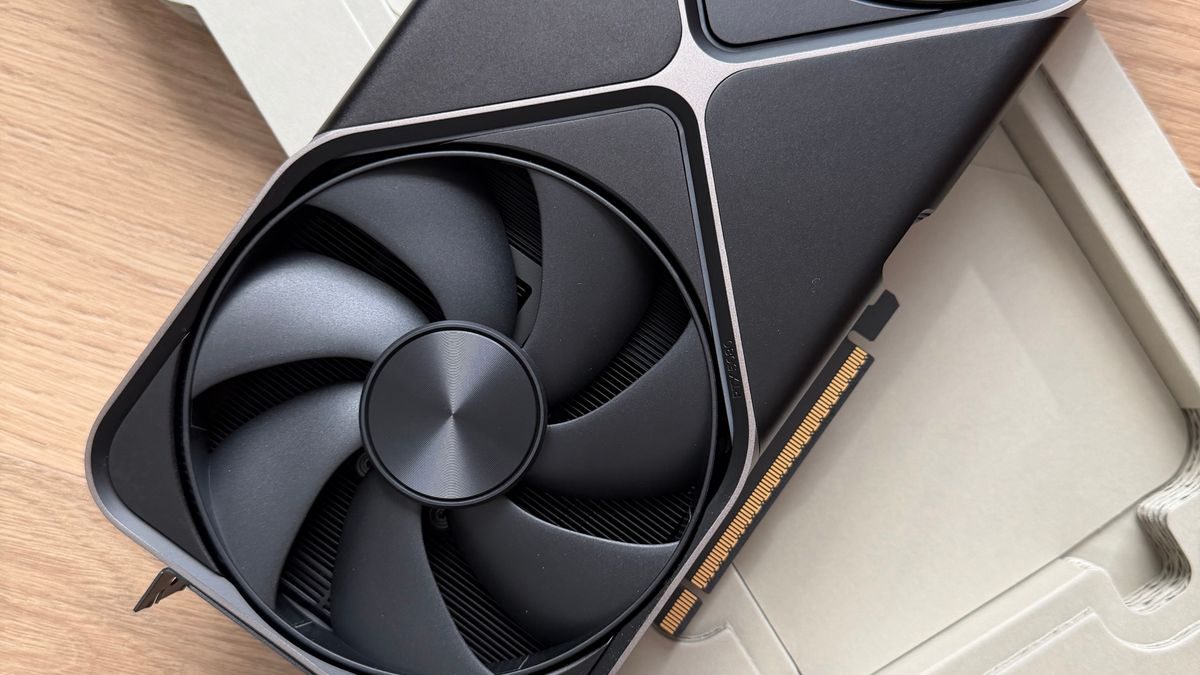
The RTX 5070 vs RX 9070 XT fight looked simple at launch: Nvidia's card cost $549, AMD's cost $599, and the Radeon was faster. In late 2026, the memory shortage has blown up both price tags. As of Black Friday week, the cheapest RTX 5070 in the US sits around $840 to $900, while the RX 9070 XT starts near $1,000. That changes the math, but not the basic answer.
Our verdict: if you can get the RX 9070 XT for about $100 more than an RTX 5070, it's the better graphics card for most 1440p and 4K gamers. Published benchmarks show it about 21% faster in traditional rendering, a bit faster even with ray tracing turned on, and it has 16GB of VRAM instead of 12GB. The RTX 5070 makes more sense if you want Nvidia's DLSS 4.5 and Multi Frame Generation, lower power draw, or CUDA for creative apps, or if you find one at a real discount.
Key takeaways
- The RX 9070 XT is about 21% faster than the RTX 5070 at 1440p in Tom's Hardware's raster testing, and about 8% faster with ray tracing.
- Late 2026 US prices: RTX 5070 from about $840 to $899, RX 9070 XT from about $999. Both launched at $549 and $599.
- The Radeon has 16GB of VRAM versus 12GB, which matters more every year at 1440p and 4K.
- DLSS 4.5 is still the stronger, more widely supported upscaling and frame generation package.
- Nvidia's RTX 50 Super cards have not launched, and recent reports say they're on hold because of memory costs.
RTX 5070 vs RX 9070 XT at a glance
| Spec | Nvidia GeForce RTX 5070 | AMD Radeon RX 9070 XT |
|---|---|---|
| Architecture | Blackwell | RDNA 4 |
| Shader units | 6,144 CUDA cores | 64 compute units (4,096 stream processors) |
| VRAM | 12GB GDDR7, 192-bit | 16GB GDDR6, 256-bit, 64MB Infinity Cache |
| Board power | 250W | 304W |
| Recommended PSU | 650W | 750W |
| Upscaling | DLSS 4.5 Super Resolution | AMD FSR Upscaling (formerly FSR 4) |
| Frame generation | DLSS Multi Frame Generation (RTX 50 only) | FSR Frame Generation (part of FSR "Redstone") |
| Launch price | $549 | $599 |
| Lowest US price, late November 2026 | About $840 to $899 | About $999 |
Specs come from Nvidia's and AMD's official product pages. Prices come from Tom's Hardware's GPU price index (updated November 25, 2026) and its Black Friday deal coverage.
Prices in late 2026: why both cards cost so much more
Both cards launched in March 2025, and for a while you could find them at or even below list price. Tom's Hardware's index shows the RTX 5070's lowest-ever US price at $479 and the RX 9070 XT's at $599. Then the AI-driven memory shortage hit graphics memory hard. GDDR6 and GDDR7 are made by the same companies that are pouring capacity into high-bandwidth memory for data centers, and GPU prices climbed through 2026.
Right now, Tom's Hardware lists the best US price for an RTX 5070 at $899, with a Newegg deal on the MSI RTX 5070 Ventus 2X OC at $839.99 on November 20. The same outlet noted that "Radeon RX 9070 XTs start at a grand." For context, the RTX 5070 Ti now goes for about $1,400, so the 9070 XT is actually the cheaper way to get that class of performance.
That price shift matters. At launch, the RX 9070 XT cost just 9% more than the RTX 5070. Today it's roughly 11% to 19% more, depending on which RTX 5070 deal you catch. The Radeon's performance lead is still bigger than that gap, but not by a huge margin.
What happened to the RTX 50 Super?
Many buyers have been waiting for an RTX 5070 Super, which leaks said would bump VRAM to 18GB using 3GB GDDR7 chips. It hasn't happened. In February 2026, Tom's Hardware relayed a report from The Information that Nvidia wouldn't release any new gaming GPUs in 2026. In July, Notebookcheck reported that the Super cards were finished but on hold because high-density GDDR7 was too expensive. Nvidia has never officially announced them. We wouldn't plan a purchase around a card that may not show up until memory prices ease.
Performance: RX 9070 XT vs RTX 5070 benchmarks
We're using Tom's Hardware's GPU Benchmarks Hierarchy (updated November 18, 2026), which tests every card on the same Ryzen 7 9800X3D system across a large game suite. Numbers are average frames per second at ultra settings, with no upscaling or frame generation.
| Test (average fps) | RTX 5070 | RX 9070 XT | Difference |
|---|---|---|---|
| 1080p raster | 132.6 | 156.6 | 9070 XT +18% |
| 1440p raster | 96.4 | 116.5 | 9070 XT +21% |
| 4K raster | 54.3 | 65.8 | 9070 XT +21% |
| 1080p ray tracing | 74.1 | 77.8 | 9070 XT +5% |
| 1440p ray tracing | 51.5 | 55.5 | 9070 XT +8% |
| 4K ray tracing | 22.7 | 30.1 | 9070 XT +33% |
In regular rasterized games, the RX 9070 XT is in a different class. It lands just behind the RTX 5070 Ti at 1440p (116.5 fps versus 116.8 fps), a card that now costs about $400 more. The RTX 5070 trails by about a fifth, which is roughly the difference between a locked 100 fps and dipping into the 80s in demanding games.
Ray tracing is closer. AMD's RDNA 4 made a big jump here, and the 9070 XT now edges out the RTX 5070 at 1080p and 1440p. At 4K, the 5070's 12GB of VRAM starts to hold it back, and the Radeon pulls ahead by a third, though neither card is really a native 4K ray tracing card. In the heaviest path-traced games, Nvidia's hardware and software still tend to do better, and Tom's Hardware notes that Radeon cards "still fall behind Nvidia in overall performance for ray/path tracing" when you compare them to the bigger GeForce cards.
Price per frame at 1440p
Using today's lowest prices and 1440p raster results, the RX 9070 XT costs about $8.58 per frame ($999 for 116.5 fps). The RTX 5070 costs about $9.33 per frame at $899, or $8.71 if you land the $839.99 Newegg deal. So the Radeon is slightly better value even at inflated prices, and you get the extra VRAM on top.
DLSS 4.5 vs FSR 4: upscaling and frame generation
This is where the RTX 5070 fights back. Nvidia's DLSS 4.5 uses a second-generation transformer model for Super Resolution and Ray Reconstruction, which improves stability and clarity. On RTX 50 cards, Multi Frame Generation can generate up to five frames for every rendered frame, and Dynamic Multi Frame Generation adjusts the multiplier on the fly to keep motion smooth. Nvidia says more than 800 games and apps use RTX features, and DLSS support is close to universal in big new releases.
AMD has closed much of the quality gap. FSR 4, now renamed AMD FSR Upscaling, is a machine learning upscaler that looks far better than older FSR versions. AMD says FSR Upscaling 4.1 works in more than 400 games, and its FSR "Redstone" suite adds ML-powered frame generation, Ray Regeneration for cleaner ray-traced detail, and Radiance Caching for lighting. The catch is adoption: Tom's Hardware notes FSR support "isn't as widespread as DLSS," so you'll find more games where the GeForce card has the better toolkit.
Our take: if you like turning on frame generation to hit 144 Hz or higher, the RTX 5070's DLSS 4.5 and Multi Frame Generation can make it feel faster than the 9070 XT in supported games. If you mostly play at native resolution or with quality upscaling, the Radeon's raw speed matters more.
VRAM: 12GB vs 16GB
The RTX 5070's 12GB of fast GDDR7 is enough for 1440p today in nearly every game, especially with DLSS lowering the internal resolution. But a growing number of games push past 12GB at high texture settings, and the 4K ray tracing results above show what happens when you run short. The RX 9070 XT's 16GB gives you more headroom for high-resolution textures, mods and the next few years of releases. If you keep a graphics card for four or five years, we'd lean toward 16GB, particularly with no affordable VRAM upgrade from Nvidia on the horizon.
Power, heat and noise
The RTX 5070 is the more efficient card. Nvidia rates it at 250W and recommends a 650W power supply. AMD rates the RX 9070 XT at 304W typical board power and recommends 750W, and lists two 8-pin power connectors. Partner cards with factory overclocks can draw more.
The running-cost difference is small. Gaming three hours a day, the roughly 54W gap adds up to about 59 kWh a year, or around $10 at 17 cents per kWh. The bigger question is your PSU: if you have a quality 650W unit, the RTX 5070 drops right in, while the 9070 XT may push you to a new power supply and add to the bill.
Other options worth considering
Because prices have shifted so much, the most relevant matchup for some buyers is no longer the original one:
- RX 9070 (non-XT): Tom's Hardware lists it at $898, almost exactly the RTX 5070's price. It's about 8% faster than the RTX 5070 at 1440p raster, has 16GB of VRAM, but trails slightly in ray tracing. At equal prices, it's the RTX 5070's most direct rival.
- RX 9070 GRE: The recently introduced GRE has 12GB of VRAM and has sold for about $700 to $730 this month. It's about 10% slower than the RTX 5070 at 1440p, but cheaper, which makes it a good budget pick for 1440p.
- RTX 5070 Ti: It matches the 9070 XT in raster and leads in ray tracing, but at around $1,400 it's hard to justify for most people.
Which should you buy?
Buy the RX 9070 XT if you game at 1440p or 4K, care most about raw frame rates, want 16GB of VRAM for the long haul, and your PSU can handle about 300W for the GPU. It's the better card per dollar even at today's inflated prices.
Buy the RTX 5070 if you rely on DLSS and frame generation, play a lot of heavily ray-traced or path-traced games, use CUDA-accelerated apps like Blender or DaVinci Resolve, or want a cooler, quieter build on a 650W power supply. Grab it if you see one under about $850.
Wait if your current card still runs your games acceptably. Memory makers expect the shortage to last into 2027 and beyond, so we don't expect a big drop soon, but paying nearly double launch price for a midrange card only makes sense if you truly need an upgrade now.
Outside the US: UK, EU, Canadian and Australian prices have moved the same way, but the gap between these two cards varies a lot by country and retailer. Compare local prices before deciding, since a small regional discount can flip the value pick.
FAQ
Is the RX 9070 XT better than the RTX 5070?
For most gamers, yes. In Tom's Hardware's testing it's about 21% faster at 1440p without ray tracing, slightly faster with ray tracing, and it has 16GB of VRAM instead of 12GB. The RTX 5070 wins on power efficiency and the DLSS 4.5 feature set.
How much do the RTX 5070 and RX 9070 XT cost now?
In late November 2026, the cheapest RTX 5070 cards in the US cost about $840 to $899, and RX 9070 XT cards start at about $999. Both are well above their $549 and $599 launch prices because of the memory shortage.
Is 12GB of VRAM enough in 2026?
For 1080p and most 1440p gaming, yes, especially with DLSS. At 4K or with maximum texture settings in newer games, 12GB can run short, which is why we prefer 16GB for anyone keeping a card for several years.
Is DLSS 4.5 better than FSR 4?
DLSS 4.5 is generally ahead in image quality and is supported in far more games, and RTX 50 cards also get Multi Frame Generation. FSR 4, now called AMD FSR Upscaling, is a big improvement and works in more than 400 games, so the gap is smaller than it used to be.
Is the RTX 5070 Super coming out?
Nvidia hasn't announced it. Reports from 2026 say the RTX 50 Super cards were delayed, and in July Notebookcheck reported they were finished but on hold because 3GB GDDR7 memory chips cost too much. Don't count on seeing one soon.
What power supply do I need for the RX 9070 XT?
AMD recommends at least a 750W power supply for the RX 9070 XT, which is rated at 304W. Nvidia recommends 650W for the 250W RTX 5070.
Want more help choosing? See our full graphics card coverage, plan the rest of your system with our PC build guides, and keep an eye on the hardware deals hub for GPU prices that are actually worth paying.
Sources: Tom's Hardware GPU Benchmarks Hierarchy, Tom's Hardware GPU price index, Tom's Hardware RTX 5070 deal, Nvidia RTX 5070 specs, AMD Radeon RX 9070 XT specs, Nvidia DLSS, AMD FSR, Notebookcheck on RTX 50 Super, Tom's Hardware on Nvidia's 2026 GPU plans, Notebookcheck on 2026 GPU price increases
 WordPress Plugins
Elementor vs Divi in 2026: Which WordPress Builder Wins?
Elementor vs Divi in 2026: Divi 5 and Elementor 4 compared on price, speed, lock-in, templates and AI tools, plus a clear pick for...
Read article
 Linux
Linux Mint vs Ubuntu (2026): Which Should You Use?
Linux Mint vs Ubuntu in 2026: we compare Mint 22.3 and Ubuntu 26.04 LTS on desktop, Snap vs Flatpak, hardware, gaming and support...
Read article
 Design & Creative Tools
Canva vs Adobe Express (2026): Which Design App to Pick?
Canva vs Adobe Express in 2026: free plans, Pro and Teams prices in US dollars, AI tools, templates, brand kits, print and video,...
Read article